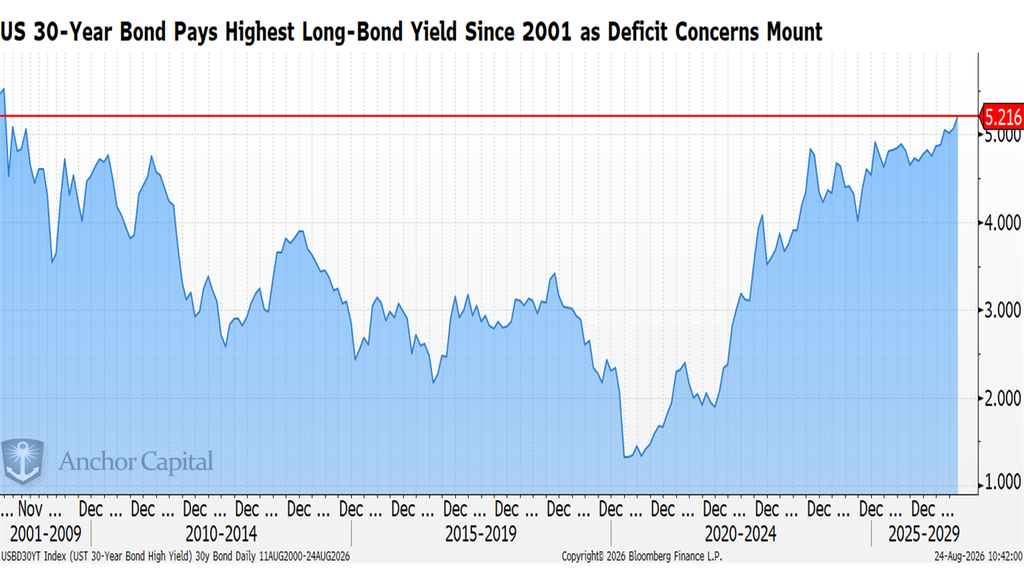
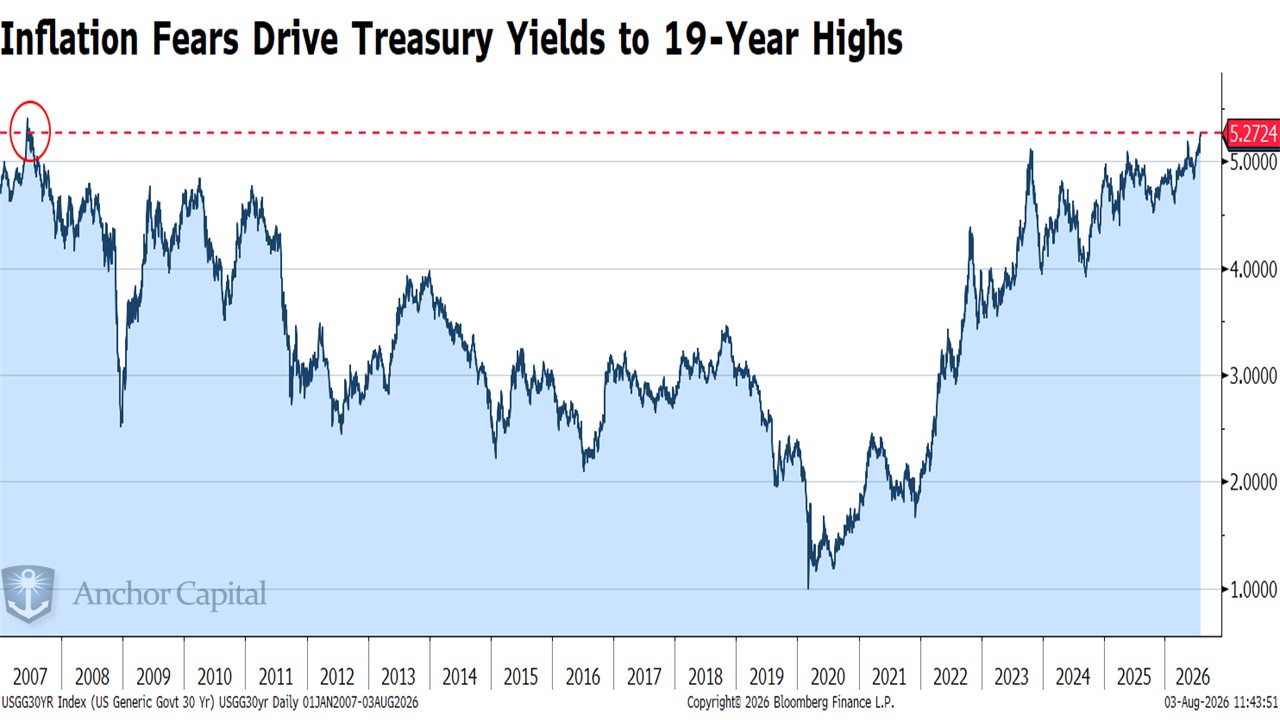
Earlier this month, the U.S. government conducted a 30-year Treasury auction that yielded 5.216% – the highest borrowing cost since 2001. It’s the market’s way of demanding higher compensation to finance growing fiscal deficits and a heavier issuance calendar. Demand was technically sufficient, but the internals told the real story: the bid-to-cover ratio slipped from the prior month, and foreign buyers took a noticeably smaller share of the auction, leaving primary dealers to absorb more of the overflow. Investors aren’t refusing to buy long-duration Treasuries; they’re just charging more to hold them.
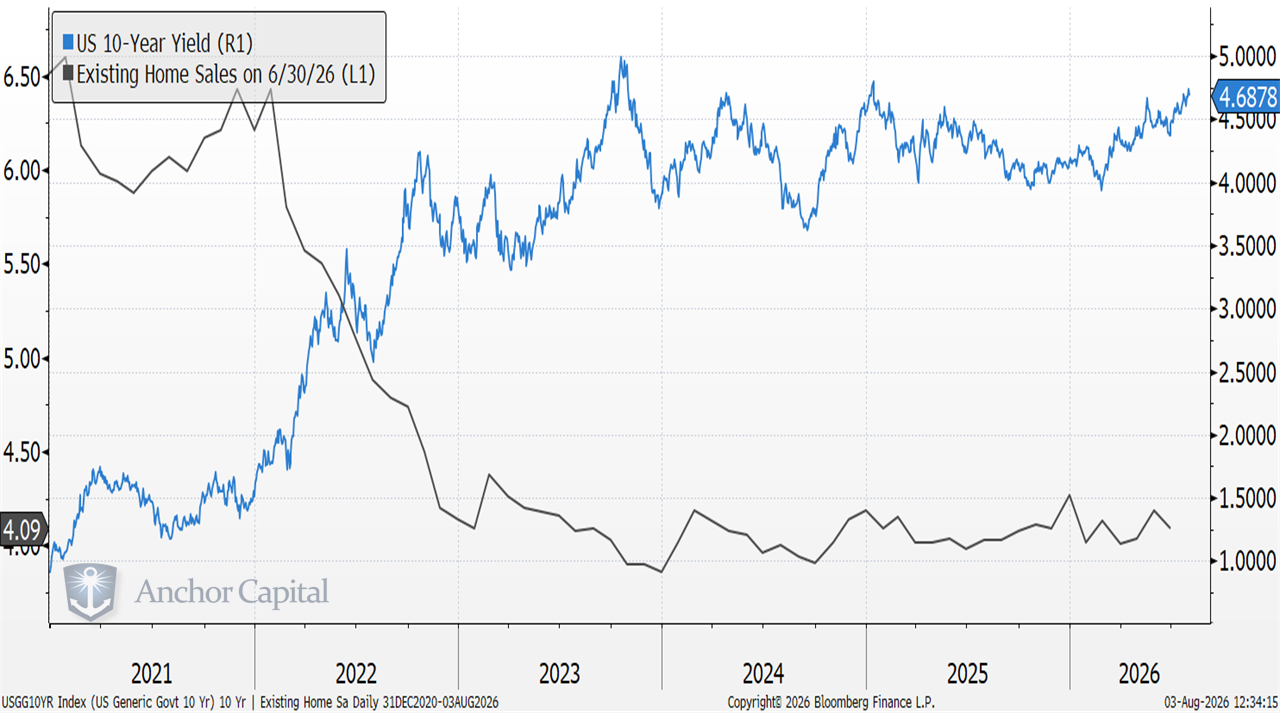
That repricing doesn’t stay contained to the Treasury market. Long-term yields are the benchmark for anything priced off duration including mortgages, corporate debt, municipal bonds, and leveraged loans. As those instruments hit their refinancing windows, they reset at today’s higher rates rather than the rates they were issued at.
The part worth watching closely: leverage across the system – banks, private credit, insurers, hedge fund basis trades – is sitting near record highs. That leverage was underwritten on a cheaper cost-of-carry assumption. A structurally higher long end doesn’t just raise borrowing costs at the margin; it tightens the math on every levered position at once.