The Treasury safety premium is quietly eroding, a sign that investors are less willing to pay extra for the perceived safety and liquidity of U.S. government debt. That’s a big change, and one that could have long-term implications for the market.
Why this is happening is easy to see.
Federal deficits are running around 6% of GDP and are expected to persist for years, keeping the debt supply elevated with no obvious relief valve.
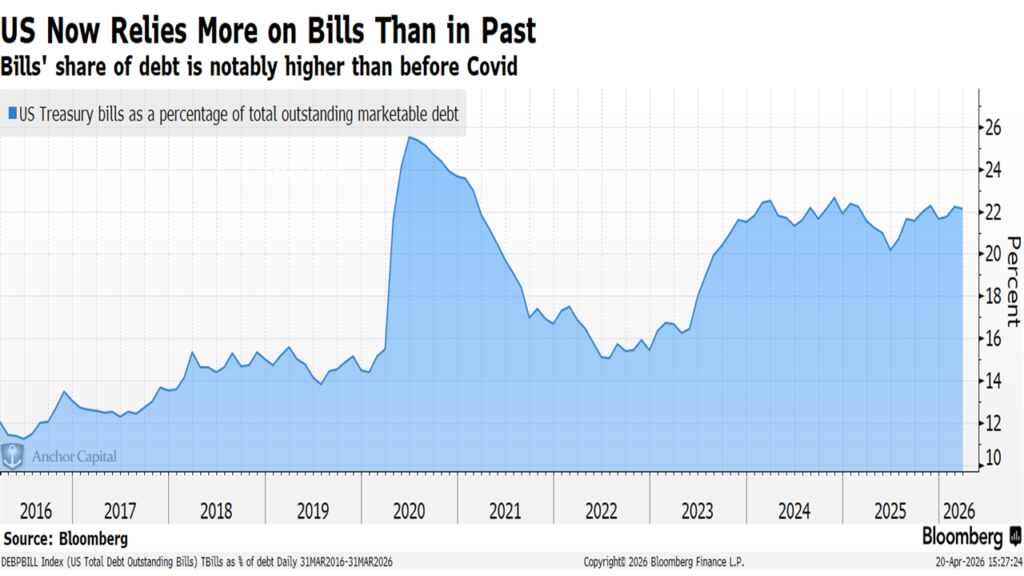
The composition of that debt also is shifting in ways that add risk. An increased reliance on short-term Treasury bills means the government must refinance frequently, leaving markets more exposed to sudden shifts in sentiment.
Under the surface, market liquidity is increasingly dependent on leveraged hedge funds running cash-futures strategies. These positions can unwind quickly under stress, and when they do they tend to amplify, not cushion, the blow.
This has implications beyond U.S. borders, too. Since Treasuries anchor global bond markets, a spike in U.S. yields tends to spill directly into foreign markets, hitting hardest the countries most reliant on external financing.