Leadership changes at the Federal Reserve, like the one coming this week when Jerome Powell’s term as chair comes to an end on the 15th, aren’t neutral events. History is clear on this, and investors who treat them as routine handoffs tend to get surprised.
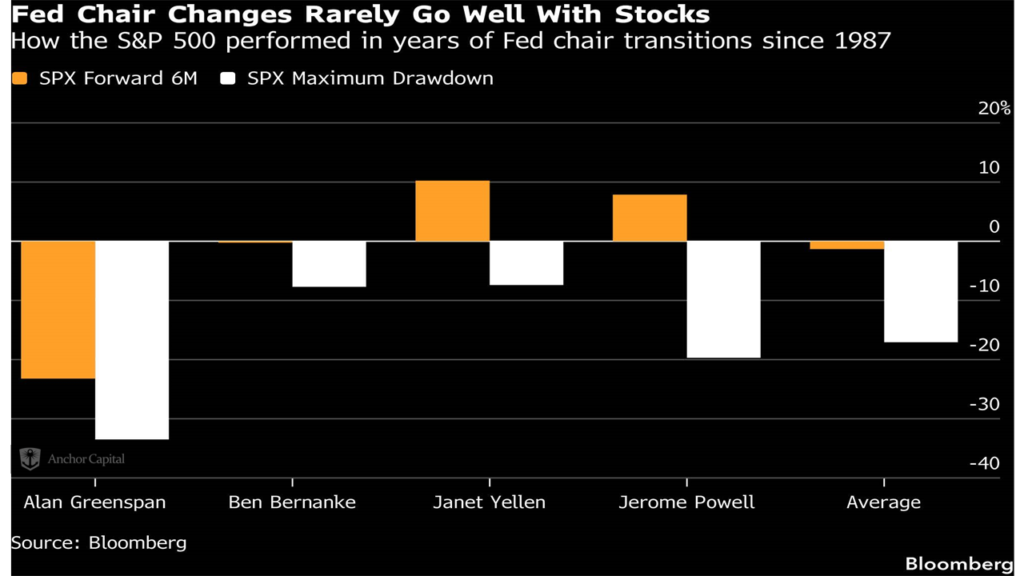
The data shows that years with Fed chair transitions have tended to consistently coincid with elevated market volatility. Historically, the S&P 500 has seen meaningful drawdowns during these windows, not because the new chair is wrong but because markets price uncertainty before they price policy.
What makes this dynamic so powerful (and potentially disruptive) is that the risk isn’t just about rates. It’s about shifting policies, questions about credibility, and ambiguity on the balance sheet. Those risk premiums tend to hang around until confidence in the new chair is earned.
And it’s not only equities. Credit spreads tend to widen. Rate volatility tends to pick up. Cross-asset correlations can potentially shift in ways that catch diversified portfolios off guard.
The potential stress compounds when transitions land during periods of tight financial conditions, elevated valuations, or inflation uncertainty, all of which are relevant right now.
Fed transitions are stress points, not milestones.