The conventional wisdom says that new Fed leadership usually means easier policy, as changes come slowly.
But the market is currently challenging that assumption.
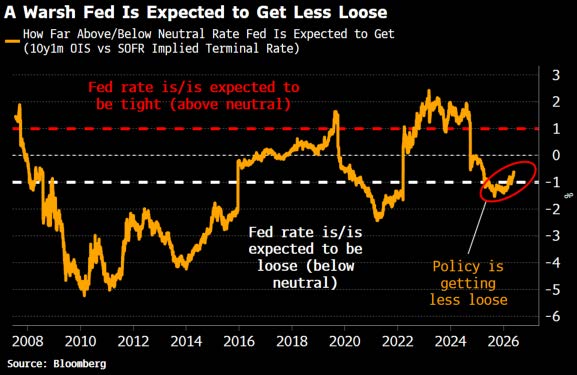
Rather than signaling a dovish pivot, the new Fed regime is coming across as more hawkish than expected, and investors are taking notice. Short-term rate expectations are climbing toward neutral and bets on near-term policy easing are being unwound. Financial conditions are quietly tightening.
There was genuine concern heading into the leadership transition that the Fed might lose some of its inflation-fighting resolve and that political pressure might soften its stance.
The early market reaction suggests the opposite is happening. Investors are extending the Fed a “vote of confidence,” betting that discipline will prevail over pressure.
In central banking, that credibility is hard-won and easily lost. The fact that markets are reinforcing rather than questioning the Fed’s resolve is a meaningful signal about where rates, and risk, are headed.
But confidence is conditional. If the Fed shows any unexpected willingness to ease prematurely, the market’s trust could evaporate fast, and the repricing could be sharp.