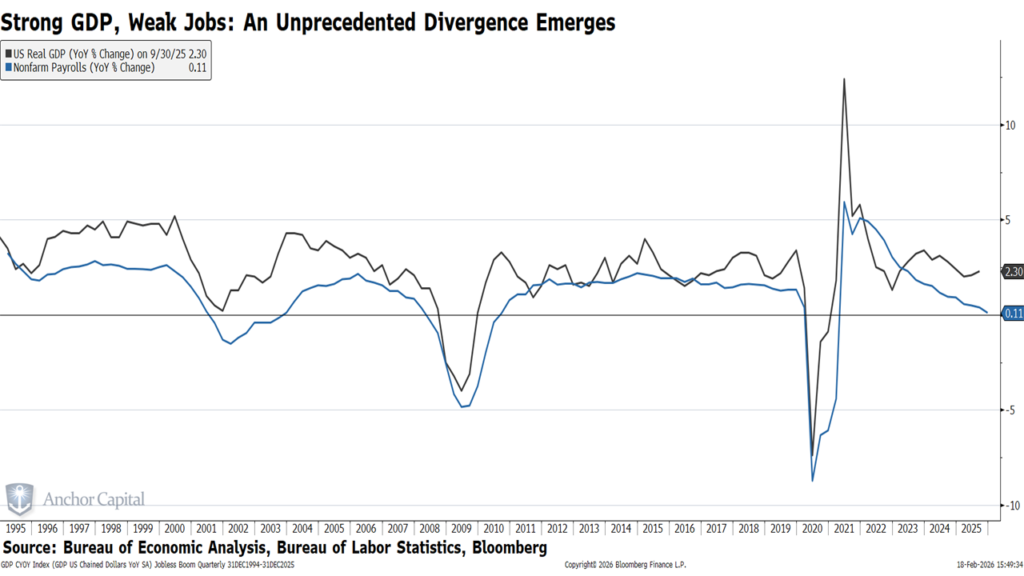
The US economy grew by roughly 2.7% in 2025, but underneath that headline something unusual is happening.
Despite positive GDP growth, employment barely grew at all last year. Economists are calling it a “jobless boom,” and it’s the first time in the post-WWII era that this kind of divergence has appeared without a recession preceding it.
The last time growth and hiring came apart like this was the early 2000s, following the dot-com bust. There’s no equivalent downturn to point to here.
The expansion is being carried by consumer spending, stock market gains, and AI-driven business investment.
The most striking part is who’s feeling the pressure. College-educated workers saw unemployment rise in 2025, while non-college workers actually fared better, a reversal of almost every prior cycle.
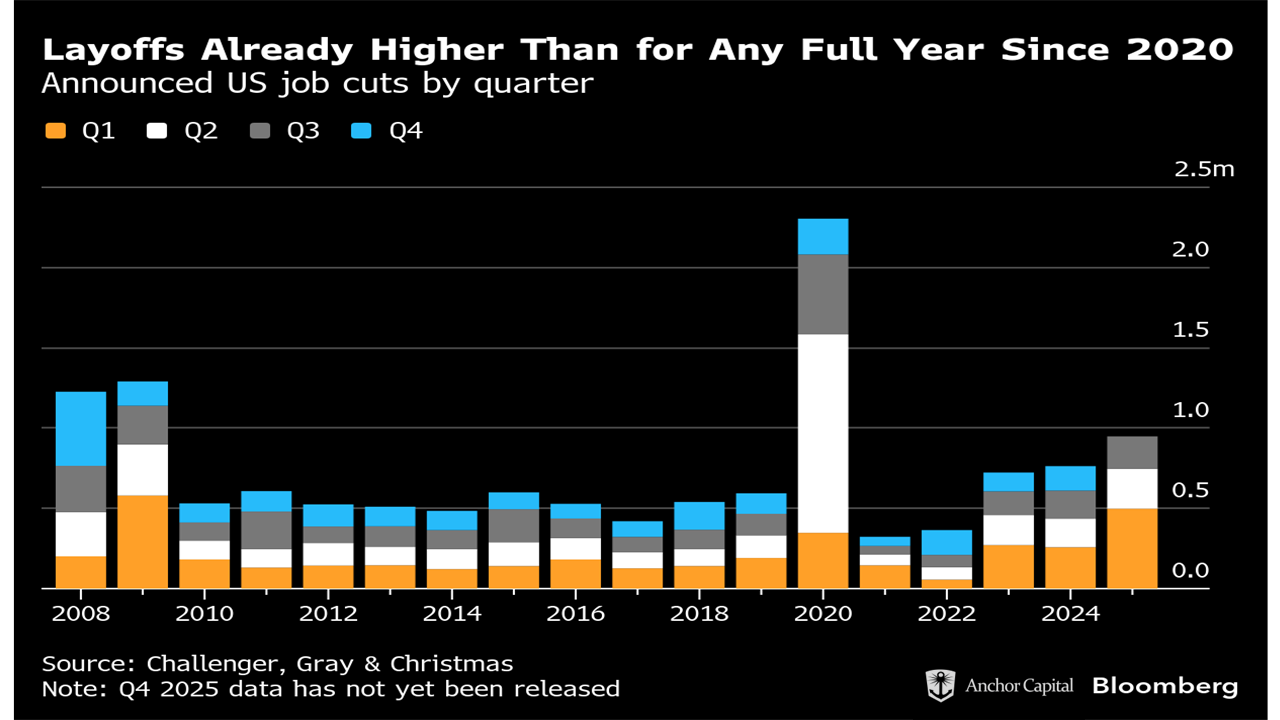
Office and administrative roles saw the sharpest jump in unemployment, signaling that white-collar job losses from automation and restructuring are no longer theoretical.
Wage growth is also slowing.
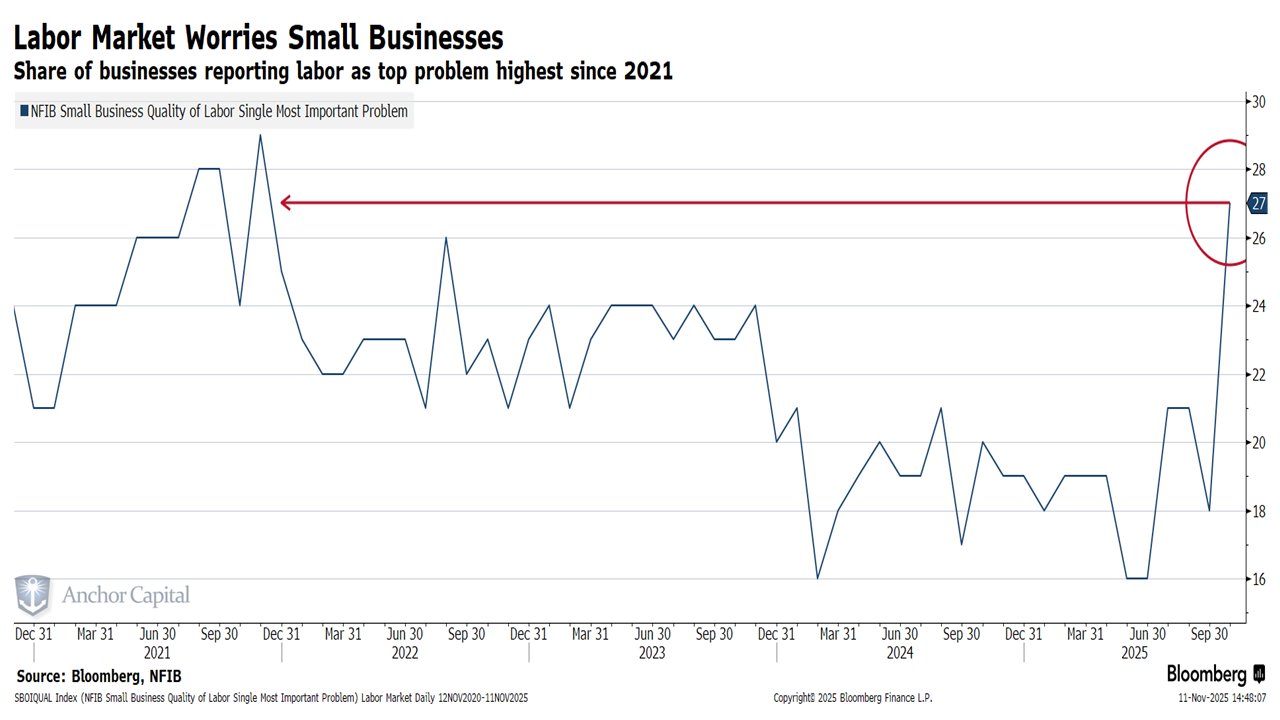
When productivity gains don’t translate into higher incomes, worker spending power erodes over time. That’s a vulnerability here; the economy looks strong on the surface but that chips away a little more each quarter that hiring and wages lag behind output.